
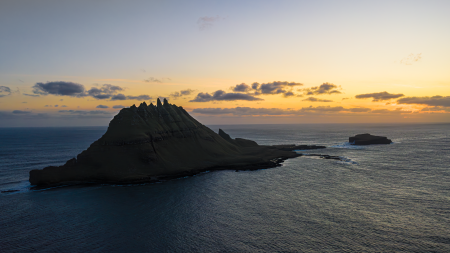

Suðuroy, the southernmost island of the Faroe Islands, carries a character that feels both intimate and elemental. Here, nature is close, dramatic, and deeply woven into everyday life. The island is shaped by wind and water, by steep mountains that fall suddenly into the sea, and by valleys that open quietly toward sheltered villages. Suðuroy does not overwhelm with scale alone; it draws you in through contrast—between softness and severity, silence and motion.
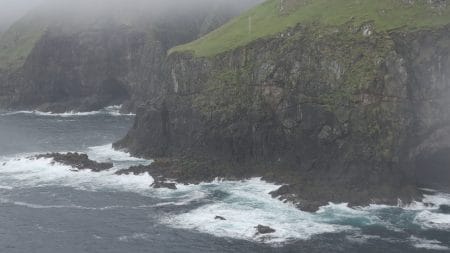
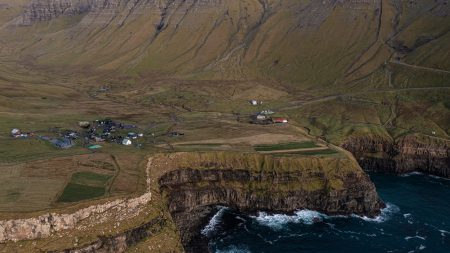
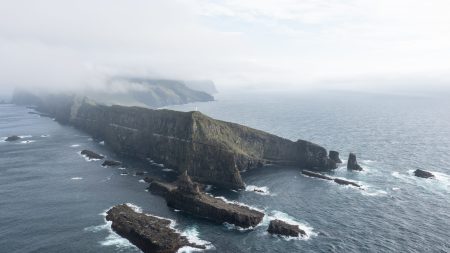
Along the western coast, towering cliffs rise straight from the Atlantic, their dark basalt faces constantly reshaped by waves and weather. Places like Beinisvørð and Eggjarnar stand as raw monuments to geological time, where seabirds circle endlessly and the ocean crashes below with a steady, thunderous rhythm. On stormy days, the wind moves unhindered across the high ground, bending grass and clouds alike, reminding you that nature here is never static. Even on calm days, the sea carries a quiet power, its vastness always present at the edge of sight.
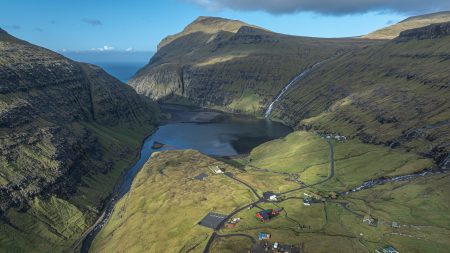
Inland, Suðuroy reveals a gentler side. Wide valleys and rolling hills stretch between villages such as Hvalba, Sandvík, and Sumba, covered in deep green grass and dotted with grazing sheep. Hvannhagi, one of the island’s most striking natural areas, opens suddenly beyond the mountains above Tvøroyri—a broad, peaceful valley with a still lake, surrounded by steep ridges. From there, the land slopes down toward the ocean, offering a rare sense of openness that feels almost hidden, as if the island is revealing a secret only to those who walk its paths.
The southern tip at Akraberg feels like the end of the world in the best possible way. Standing near the lighthouse, with nothing but sea stretching southward, the land narrows and the wind sharpens. The grass is low, the ground firm, and the horizon uninterrupted. It is a place where the boundary between land, sea, and sky feels thin, and where the island’s isolation becomes both humbling and peaceful.
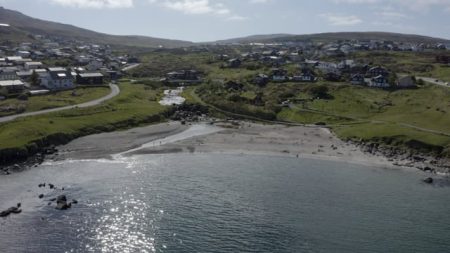
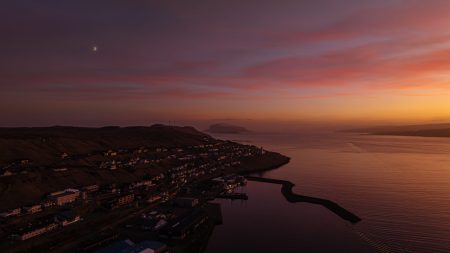
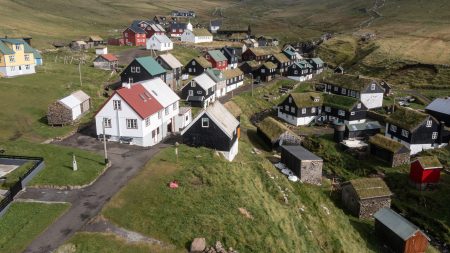
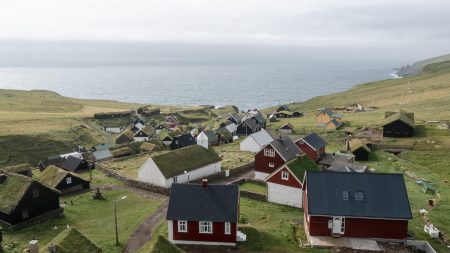
Nature in Suðuroy is inseparable from the villages nestled along its fjords and coastlines—Vágur, Fámjin, and the settlements around Trongisvágsfjørður. Mountains rise directly behind houses, and the weather sets the rhythm of daily life. Fog drifts in and out without warning, sunlight breaks through clouds in brief, brilliant moments, and rain arrives softly or suddenly. These shifting conditions give the landscape a living presence, as though the island itself is breathing.
Suðuroy’s nature is not polished or distant. It is close, felt underfoot and against the skin, shaped by centuries of wind and waves. It invites patience, attention, and respect—and rewards them with a deep, lasting sense of place.

Reviews
There are no reviews yet.