
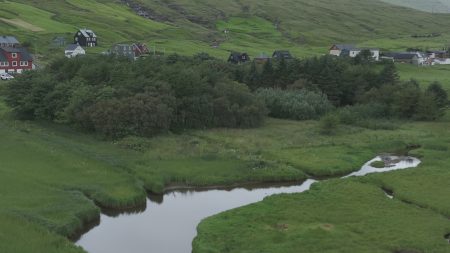

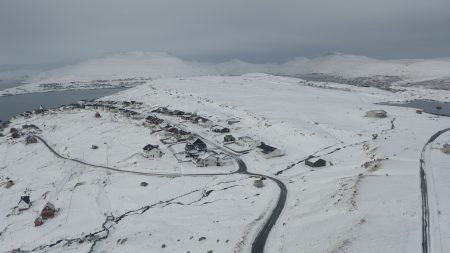

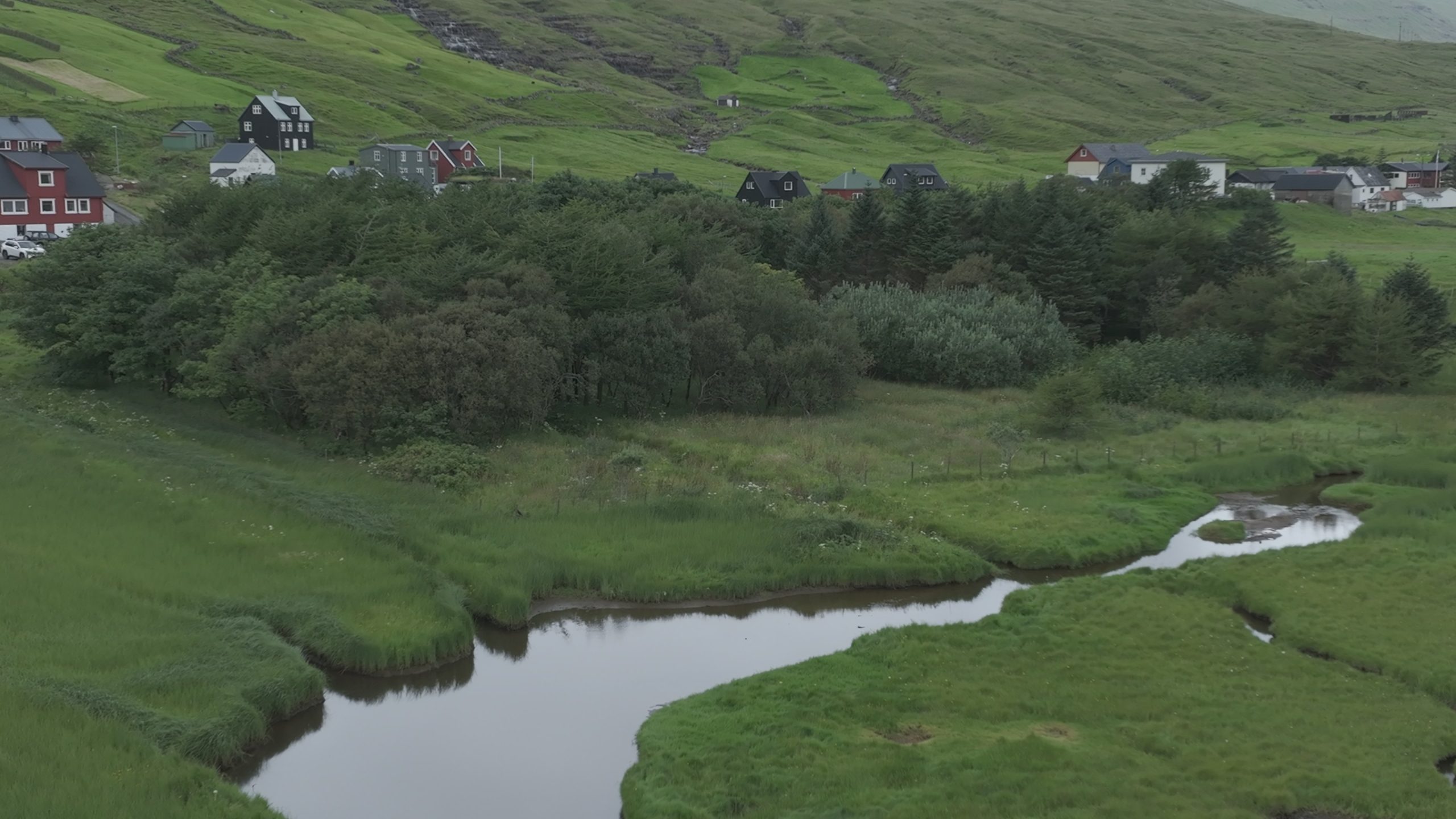
Hvalvík (Danish: Kvalvig) is a village in the Faroe Islands, located in a valley on the east coast of the island of Streymoy.
It is the southern half of a twin-village situated on both sides of the valley. The villages are divided by the river Stórá. The northern half which is approximately the same size is called Streymnes. Together the two villages have a population of more than 400 inhabitants.
Hvalvík-Streymnes is a village that has grown rapidly during the past years, mainly because of its proximity to the capital Tórshavn.
Hvalvík Church
The church in Hvalvík is a traditional wooden church dating from 1829, built because the old church from 1700 was ruined in a storm. It is the third oldest church in the Faroe Islands, though the oldest of the traditional wooden black churches. The church is built with wood bought from a ship that ran aground in Saksun in 1828. The architecture is typically Faroese, with no stone foundations. The pulpit dates back to 1609 and was originally in the church in Tórshavn.
Bishop Alexander was raised in Hvalvík, in a place called Frammi við Kráir. According to legend, he was the first to import knives and forks.
The church was featured on Faroese stamps issued in 1997.
Sunda Municipality
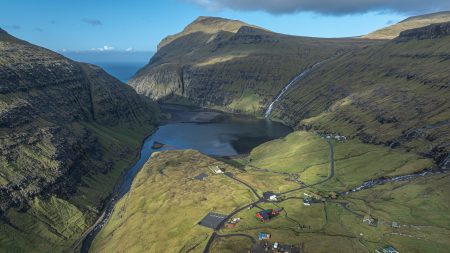
The municipality is centrally located in the country, situated in the middle of highway 10 between capital Tórshavn and second city Klaksvík. Both cities are 40 kilometers by road from Oyrarbakki. The eastern and western bank of Sundini are connected by the Streymin Bridge. This is the only road link between these islands until the Eysturoyartunnilin has finished and opened in 2021. National bus service 400 connects Tórshavn, Oyrarbakki and Klaksvík up to 11 times on weekdays in either direction, with less frequent routes to Tjørnuvík, Eiði and Gjógv operating from Oyrarbakki weekdays-only. How Sunda will be connected to Tórshavn and Klaksvík by public transport in the future, when the Eysturoyartunnilin has rearranged route 400, remains unknown. A free citizen-only bus service operated by Sunda kommuna connects all villages except Saksun and Gjógv.
Population
As of January 2024, there were 1,828 inhabitants. The population is steadily rising, up from 1.386 in 2000. The Sundalagið as a whole (including Eiðis kommuna and Gjógv) had 2,572 inhabitants in 2020. The area is popular for its central location in the country, at commuting distance from all major towns.


Reviews
There are no reviews yet.